

Fishing in Ely, MN
Ely, Minnesota, has some of the best fishing in the upper midwest, including bass, walleye, northern pike, crappie, and trout. Minnesota’s “Fishing Opener” kicks off each year in May, but Ely offers excellent fishing opportunities year-round. From comfortable Minnesota fishing resorts to remote Boundary Waters canoe fishing trips, Ely, Minnesota, has a fishing experience for you. Learn more about fishing in Ely by clicking the links below or find lodging for your next visit.
Fishing Report
Guides
Bait & Tackle
Ice Fishing
Lodging
Best Fishing Spots
Secrets from anglers in the know
For as long as you are willing to listen, skilled fish-stalkers will tell you about the bait, the lure, the angle of the sun, the depth of the water and the weight of the line. They’ll distinguish between a nibble, a swipe and a hammering chomp.
But when you ask where this drama took place, they might say something like, “Oh, somewhere up on the north end of Fenske. Buddy told me the northern are crazy up there. But keep it under your hat.” And you nod as you consider which lures to take with you this weekend.
Fortunately, enthusiasts have made their preferences clear, revealing to the Ely, Minnesota, visitor some of their favorite fishing spots. Each of these lakes is distinctive, with some combination of shape, size, islands, plant-life, shore-lunch spots and hungry fish that makes it someone’s favorite. Lakes are a little like houses — some just feel like home, and Ely’s Open House lasts year-round.
The Ely area is blessed with more than 5,000 lakes, streams and rivers, and this is just a sampling of popular spots from among the hundreds that visitors fish.
Basswood Lake
Located within the Boundary Waters Canoe Area Wilderness (BWCAW) bordering Canada, Basswood Lake is beloved by those who want some serious serenity with their northern pike and walleye hunt. Anglers travel just 7 miles north and 5 miles east of Ely and arrange a tow or portage into its 22,000-plus acres, where more than 100 campsites dot the shoreline. Anglers passionate about Basswood Lake say it is the best freshwater fishing to be found thanks to a population dominated by walleye, northern pike, smallmouth bass and plenty of cisco to keep them fat. Basswood Lake fans stick to the protected areas of the lake; they know the bays and the channels between islands stay warmer and attract baitfish. For the record, the largest Minnesota northern pike reported by the Minnesota Department of Natural Resources (DNR) was caught in Basswood; it weighed 45 pounds, 12 ounces.
White Iron Chain of Lakes
A few miles east of Ely, White Iron Lake, Garden Lake, Farm Lake and South Farm Lake make up the White Iron Chain of Lakes, where hydroelectric dams control flow and water levels on close to 11,000 acres of water. The Chain of Lakes borders the Boundary Waters Canoe Area Wilderness and mimics the BWCAW’s beauty and abundant wildlife. White Iron maintains naturally reproducing populations of game fish, including smallmouth bass, walleye and northern (and yes, the occasional trophy-size fish). The Garden-Farm-South Farm reservoir is managed for both walleye and northern. Garden Lake is stocked with walleye fingerlings every two years, so it offers up those two favorites along with smallmouth bass and panfish in typical northeastern Minnesota varieties.
Birch Lake
Birch Lake is south of Ely, north of Babbitt, and more than 7,000 acres of fun. Beautiful and accessible, Birch Lake has multiple public access points. Seventy-five percent of its shoreline remains undeveloped and publicly owned. This popular lake has a craggy, irregular shoreline that creates enough irresistible bays, deep pools, weedy patches and shallows to keep fisherfolk busy catching walleye, northern pike, crappie and bluegill. Serious anglers and happy houseboaters share this giant beauty with canoes and kayaks, while swimmers and campers enjoy the surrounding parks and campgrounds.
Fenske Lake
Fenske Lake is located along the Echo Trail just 7 miles north of Ely. This little gem — less than 120 acres — has been described by fans as the closest thing to a Boundary Waters lake you can find outside the BWCAW. Northern, walleye and smallmouth bass can be found in this lake with a bottom the DNR calls “abundant muck.” Smallmouth like it and thrive in the underwater forests of aquatic plants on the eastern and western ends. On Fenske Lake, beaver dams limit fish movement, the water is soft and clear, the shoreline is irregular and the fishing is predictably good.
Little Long Lake
Four miles northeast of Ely, the 293-acre Little Long Lake presents spectacular fishing for walleye anglers. The lake is thick with them, and they’re big — averaging over 19 inches. Little Long Lake also has smelt that feed those walleye well; veteran anglers take that into consideration and use lures that imitate the forage to hook a lunker. Smallmouth bass, northern pike and a variety of panfish thrive there too, and anglers are successful often enough to make this lake a favorite. A fat walleye from Little Long will earn real bragging rights.
Bear Island Lake
Bear Island Lake, southwest of Ely, is about 4 miles long and 2 miles wide. It has very clear water and a healthy walleye population. Veteran anglers use natural-colored lures to closely imitate the forage. Bear Island fans say this 2,360-acre lake is also good for smallmouth bass because it has so much plant life. One large island dominates the center of the lake, and 20 or so others are spotted around, so the fishing comes with a variety of flying and skittering animal life to watch — and its shallow bays and sandy beaches are great for a cooling dip on a hot day.
Big Lake
Big Lake, covering more than 1,900 acres, is snuggled against the Echo Trail about 12 miles northwest of Ely and is surrounded by the Boundary Waters Canoe Area Wilderness. This scenic area is wooded with pine, birch, spruce, balsam and aspen that harbor abundant wildlife. Big Lake is stocked with walleye fry every three years, so Minnesota’s most sought-after fish abounds — along with smallmouth bass, northern pike and crappie. The area’s beautiful, rocky shoreline has public campsites and a concrete boat ramp off the Echo Trail for public access. The lake has 14 islands, numerous inlets and bays, and offers exceptional fishing by boat or canoe.
Moose Lake
The 1,300-acre Moose Lake is about 17 miles northeast of Ely. With its northeastern half located within the Boundary Waters Canoe Area Wilderness, Moose Lake has long been considered to be the end of the road and beginning of the wilderness. Its clear water is home to northern pike and walleye that grow faster than average, abundant smallmouth bass, largemouth bass and a variety of panfish. Expect a little company; it’s a popular BWCAW entry point with a lot of outfitters and guides serving canoe campers and anglers on their way to Basswood, New Found, Sucker, Ensign and numerous other lakes.
Shagawa Lake
Shagawa Lake is so close to Ely you can stand almost anywhere in town and throw a rock into it. OK, that’s a stretch — but it is close enough to wet a quick line when the urge to fish is suddenly overwhelming. This craggy-edged lake of more than 2,000 acres has many small islands and weed beds, which is why it is touted as prime fishing habitat. Walleye as long as 26 inches and northern as long as 43 inches have been caught in its waters. Shagawa Lake is stocked with a couple of million walleye fry every third year, and it also has a lot of perch — which sustains this great walleye fishery. Anglers can expect to catch a variety of fish, including smallmouth bass, northern, crappie and bluegill.
Northeast Minnesota holds the state records for biggest walleye, northern and lake trout — they grow ’em big up there. While this does not guarantee a trophy, the chances increase with the multitude of opportunities in the Ely area. In-the-know anglers check the Ely Minnesota Fishing Report for the latest fishing activity and tips. For detailed lake information, they check with local experts; owners of lodging facilities, outfitters, fishing guides and bait shops all have lots of tips to share. They explore, they watch and listen; they cast and learn. They discover where it’s possible to catch a crappie the size of cast-iron skillet — or a copper-colored walleye so beautiful they question whether to keep it.
And once they find the lake that feels like home, it becomes their own secret place that perhaps a few others know about . . . but they don’t care. With more than 5,000 lakes, streams and rivers, there is no shortage of fishing opportunities in the Ely area.
Kristine Chapin | Ely Minnesota Tourism Bureau
Kinds Of Fish
It’s explosive. Spectacular. red-eyed, smallmouth bass going off the water like skyrockets. Crappie pin wheeling in bursts of silver. Northern pike bursting like green Roman candles. Golden flashes of walleye. Torpedoing, gleaming lake trout. All usher in Ely’s spectacular fishing.
The Ely area is blessed with access to more than 5,000 lakes, streams and rivers in northeastern Minnesota.
Enjoy evening fishing when the swarms of stars appear like specks of silver on a blue-black blanket stretched almost within reach over the tree tops. At times, the incredible flashes of northern lights, will flare with streaks of white, pink or green, arching in ribbons across the sky or dancing like curtains of colors.
Morning fishing offers a completely different spectacle. Great blue herons stalk the shallows in the morning mists while loons, decked out in their formal black and white attire, send mournful cries echoing from shore to shore.
Here are our most common and most commonly sought fish species in area waters.
Walleye
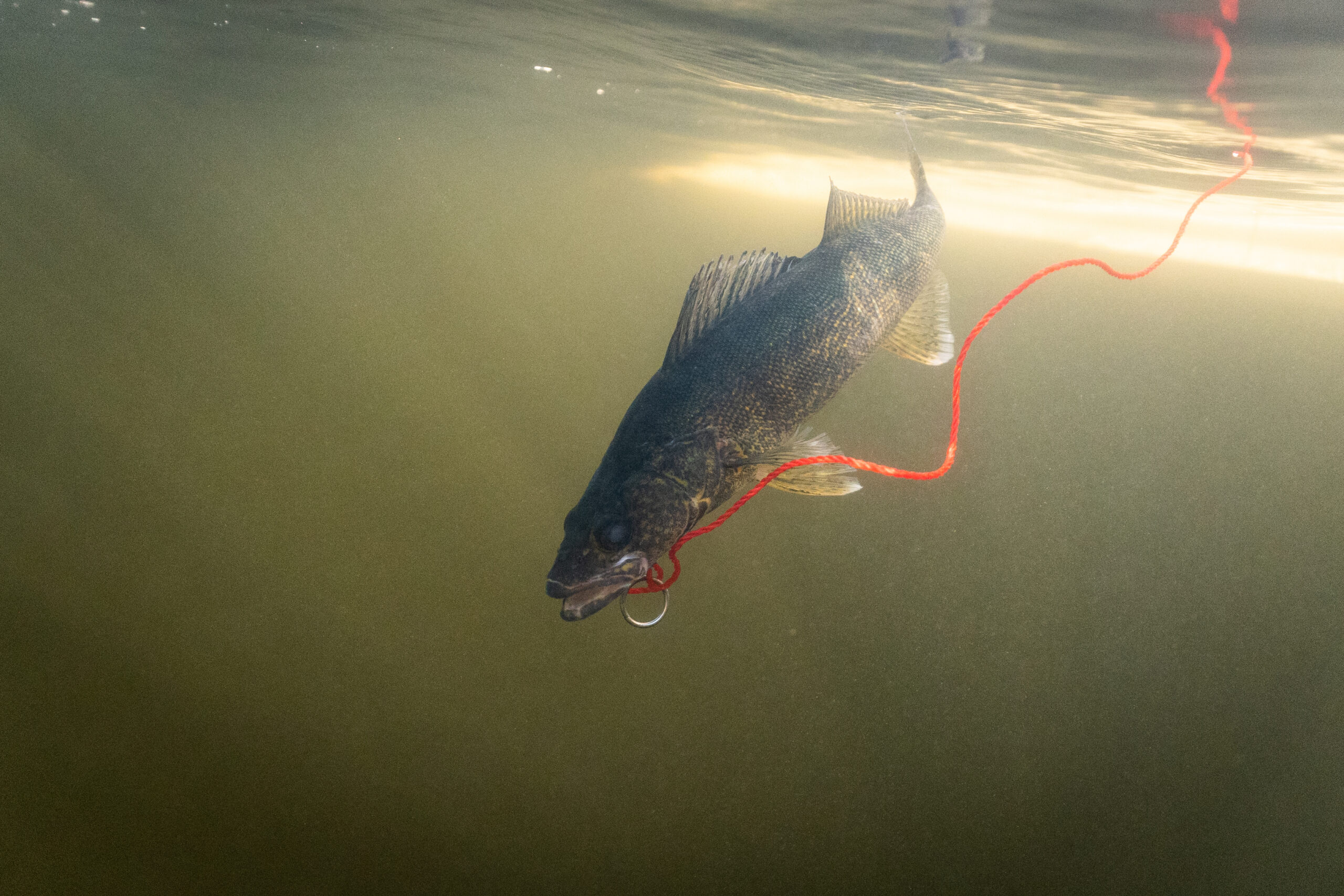
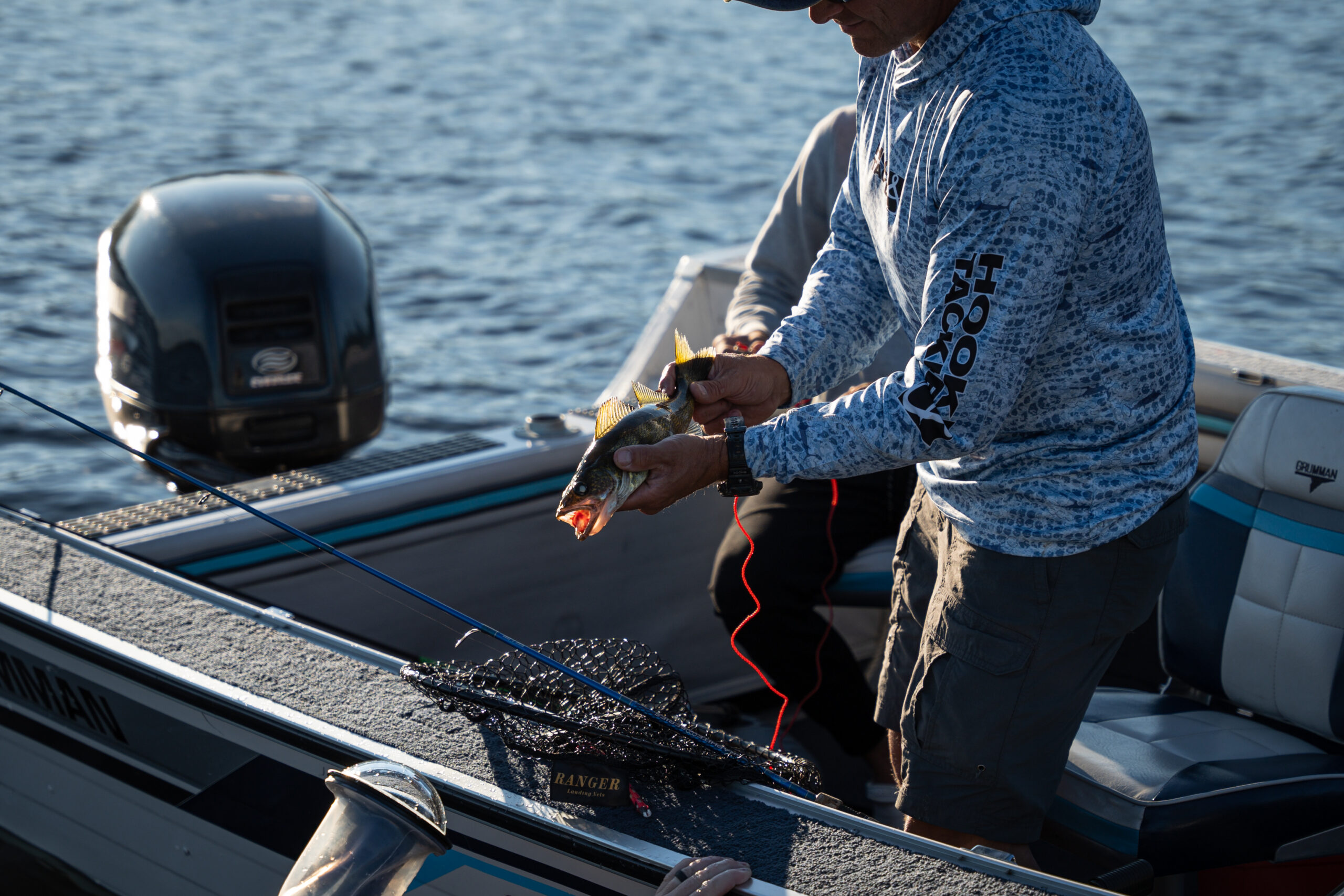
The most sought after prize in Ely area lakes is the golden sided, glass-eyed walleye. Nothing can beat a skillet of golden brown fillets sizzling over a campfire.
Many veteran anglers prefer to pursue the walleye at night. There is no question that the big ones – trophy sized 8 to 10 pounders, will swim into the shallows at night to feed. Sandbars, in the currents between lakes or where streams enter quieter waters are all likely spots to hook a lunker with rapalas, rebels and other minnow-like crank baits.
This certainly doesn’t mean that you can’t catch walleyes during the day. Some of the best fishing of the year can be enjoyed in the middle of the day on the typical resort lake, with the bait ranging from minnows and leeches to night crawlers.
The really adventurous fisherman can go into some of our remote waters. We have ten wilderness-type lakes for every one with cabins on the shore. Resorters, outfitters or bait shops will be able to help you with walleye fishing tips for the best bait, lures and locations. Our state record walleye is 17.5 pounds.
Smallmouth and Largemouth Bass
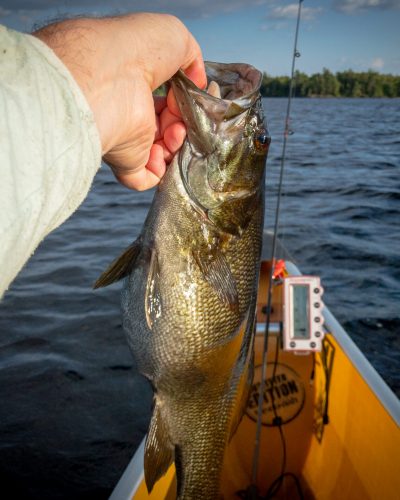
Smallmouth Bass: Smallmouth bass, those snub-nosed, flaming eyed warriors of the boulder piles, are cruising the breakline in marauding schools, daring the fisherman to invade their domain. The smallmouth is ounce for ounce the fightingest fish that swims, and these are world-class waters to catch them in! The clear, granite-rimmed waters of the Canadian Shield offer optimum conditions for smallmouth to flourish.
In recent years the number of bass in the area has gotten so high, the season has been lengthened. According to reports those numbers show no signs of diminishing. This however, does not mean that anyone that shows up with a rod and reel is going to fill out on trophy-sized bass. They’re intelligent fish – ask around and you’re sure to get some tips on how to hook them.
Once located, smallmouth will hit Rapalas or similar crank baits, Mepps and other spinners. They also love live bait rigs tipped with leeches, minnows or crawlers. So if you want action like you’ve dreamed about, head to Ely. Our state record: 8 pounds.
Largemouth Bass: Almost identical in appearance to the smallmouth, largemouth bass inhabit weedy areas of inland lakes. Like the smallmouth, they are known for their scrappy qualities on the end of a line. Most bass anglers prefer artificial lures but largemouths can also be take with live bait.
In the heat of summer, try catching a couple dozen small frogs and toss them towards some lily pads. This combination can be murder on all species of fish, but bass especially, can’t seem to pass it up. Our state record: 9 pounds 4 ounces.
Northern Pike
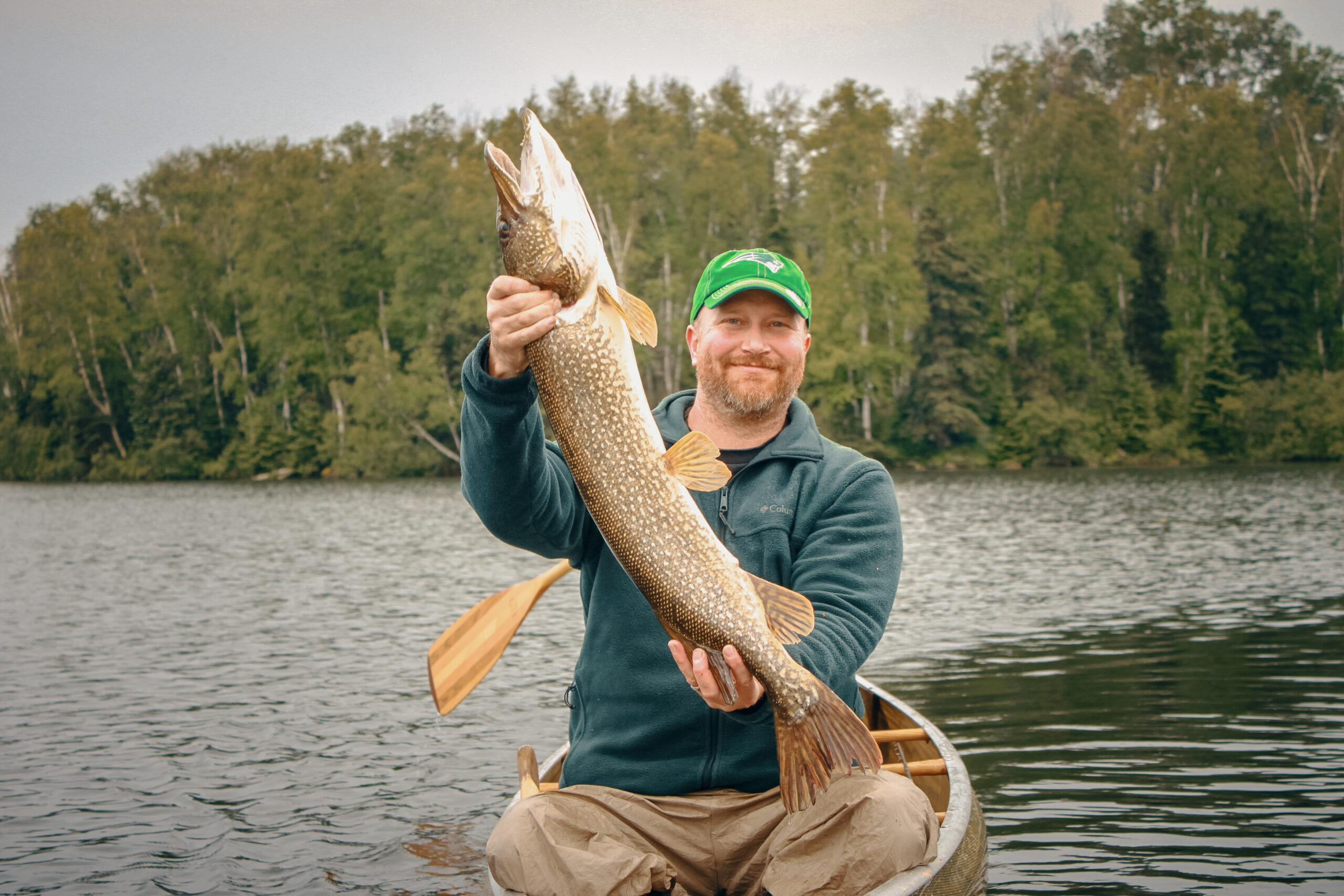
Northern pike fishing is an explosive, foam-flying, surface busting experience. Generally known to inhabit weedy areas of lakes in water depths of 15 feet or less, northerns are found in all our area waters.
Northerns can be taken on large trolled lures – spinners, plugs, spoons and on sucker minnows. As they are primarily daytime feeders, it is common on some lakes to land,photograph, and release 25 or more of these fighters in a single day. Many anglers will keep only the occasional trophy for the taxidermist, and a couple of 30-inchers for supper.
Lake Trout and Rainbow Trout
Lake Trout, powerful rod and reel antagonists, are native to the Ely area and offer and incredible array of action “Lakers” are found in many of the Ely area lakes, as they prefer water temps between 45-55 degrees. Our area is blessed with some excellent lake trout waters where the fish can be taken on deep-fished white jigs or frozen ciscos (available in any area bait shop.)
Lake trout are often taken through the ice in January and February by jigging with artificial lures or still fishing with live or dead minnows. They move into the shallows after the spring ice breakup and are commonly caught by casting with artificial lures or by still fishing with live or dead minnows or cut bait. Lake trout inhabit deeper water during mid-summer and therefore are more difficult to catch. State record: 43 pounds 8 ounces.
Rainbow Trout: The fighting qualities of the rainbow make it the favorite of most Minnesota trout anglers. they are found in many small reclaimed lakes in the Ely area. Local resorts and outfitters have information on what lakes hold these and other species of trout, how to get to many of these lakes and the access available.
In smaller lakes, they are caught by still fishing with night crawlers or salmon eggs, or by casting or trolling with various types of artificial lures including spinners, small spoons and flies. State record: 17 pounds 6 ounces.
Panfish
Black Crappie: Schools of slab sized black crappies inhabit many area lakes and many anglers have begun to cash in on Ely’s abundant but less publicized panfish. Fish up to two pounds are taken in many of the area lakes, usually on small minnows, jig-and-minnow combinations or tiny jigs.
Lake trout are often taken through the ice in January and February by jigging with artificial lures or still fishing with live or dead minnows. They move into the shallows after the spring ice breakup and are commonly caught by casting with artificial lures or by still fishing with live or dead minnows or cut bait. Lake trout inhabit deeper water during mid-summer and therefore are more difficult to catch. State record: 43 pounds 8 ounces.
Rainbow Trout: The fighting qualities of the rainbow make it the favorite of most Minnesota trout anglers. they are found in many small reclaimed lakes in the Ely area. Local resorts and outfitters have information on what lakes hold these and other species of trout, how to get to many of these lakes and the access available.
In smaller lakes, they are caught by still fishing with night crawlers or salmon eggs, or by casting or trolling with various types of artificial lures including spinners, small spoons and flies. State record: 17 pounds 6 ounces.
Crappies aren’t just a summer fish, they’re a favorite of many ice fishermen too, sometimes providing unbelievable winter action. State record: 5 pounds.
Perch: A favorite of many anglers, perch can be found in a variety of lakes. They are a schooling fish whose food requirements are very general. They prefer lakes with rocky or sandy bottoms and abundant vegetation and will bite on small jigs or a hook baited with a worm or small minnows. State record: 3 pounds 4 ounces.
Bluegill: Close your eyes and imagine a bluegill that you can’t get your hand around. Many area lakes offer the opportunity to turn imagination into reality. They are aggressive feeders and will bite on both artificial and live bait. Ultralight fishing rigs or fly rods with small jigs are best for fishing panfish. State record: 2 pounds 13 ounces.
Panfish
Black Crappie: Schools of slab sized black crappies inhabit many area lakes and many anglers have begun to cash in on Ely’s abundant but less publicized panfish. Fish up to two pounds are taken in many of the area lakes, usually on small minnows, jig-and-minnow combinations or tiny jigs.
Lake trout are often taken through the ice in January and February by jigging with artificial lures or still fishing with live or dead minnows. They move into the shallows after the spring ice breakup and are commonly caught by casting with artificial lures or by still fishing with live or dead minnows or cut bait. Lake trout inhabit deeper water during mid-summer and therefore are more difficult to catch. State record: 43 pounds 8 ounces.
Rainbow Trout: The fighting qualities of the rainbow make it the favorite of most Minnesota trout anglers. they are found in many small reclaimed lakes in the Ely area. Local resorts and outfitters have information on what lakes hold these and other species of trout, how to get to many of these lakes and the access available.
In smaller lakes, they are caught by still fishing with night crawlers or salmon eggs, or by casting or trolling with various types of artificial lures including spinners, small spoons and flies. State record: 17 pounds 6 ounces.